Category: Ireland

  • A Visit to St. Peter’s Churchyard, Templeport

    A Visit to St. Peter’s Churchyard, Templeport

    A Visit to St. Peter’s Churchyard, Templeport

    My Mum is from a place called Bawnboy in Co. Cavan. Bawnboy is a village in the parish of Templeport in Co. Cavan, Ireland. I finally got home in August and got to spend time with my family. This included an evening visiting where my Mum is from, visiting my Nana and Granda’s graves in the nearby Kilnavart graveyard, and a quick trip to St Peter’s Church in Templeport. I hasten to add this is a journey around the churchyard and not the actual church itself as it was closed on our visit.

    History and Folklore

    I remember as a small person passing the laneway which leads to the church and Mam telling us that the laneway led to St. Mogue’s Island. This is the first time, however, that I had actually walked through the graveyard.

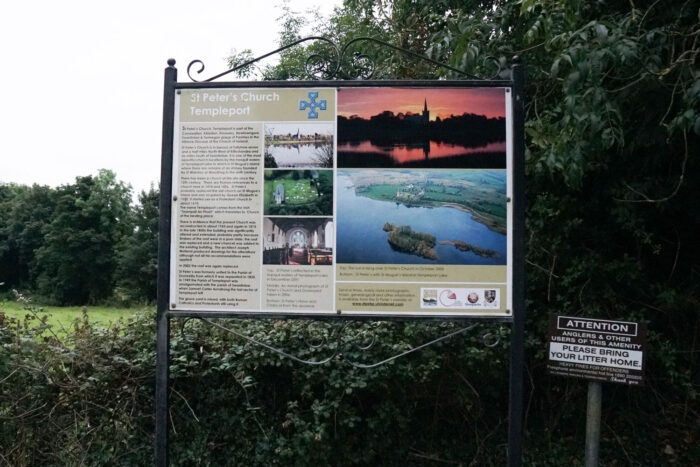
    St Peter’s Church was built on the shore of Templeport Lake. In the middle of the Lake is St. Mogue’s Island, a tiny island with the ruins of an old Church that has been used as a cemetery. It’s officially closed now except only for a few family members of those already buried on the island.

    There is a definite sense of history on the churchyard, much like in St Columba’s Churchyard in Kells, the ground has subsided in parts. The local Templeport website says that there has been a church there since 1594. The church that stands there now was built in 1815.

    Since I’ve been reading and trying to find out more about St Peter’s Church, I found this about an RAF plane that crashed into Templeport Lake. It immediately jolted my memory and I remember Nana telling me in her kitchen as I was drying the dishes about a British plane that crashed. I had completely forgotten about this.
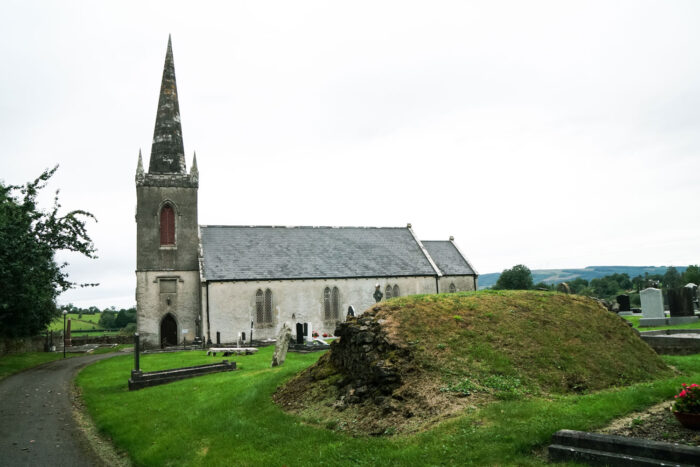
    St Peter's Churchyard Templeport

    When you arrive at St Peter’s you are greeted by the black gates, there’s a path straight in front of you which lies around the boundary of the churchyard. The church and burial grounds are to your your right.

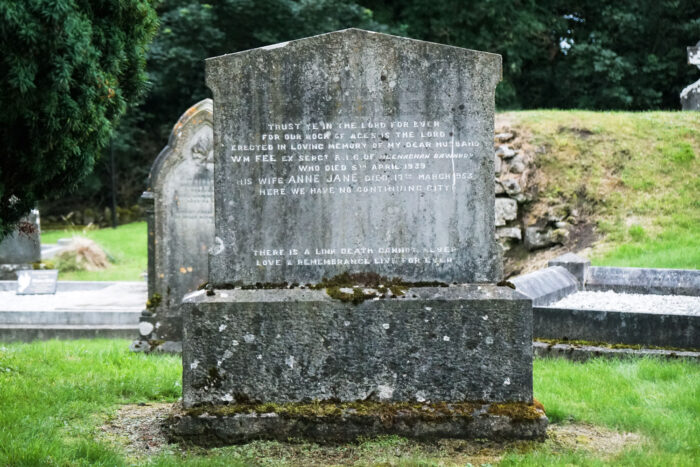
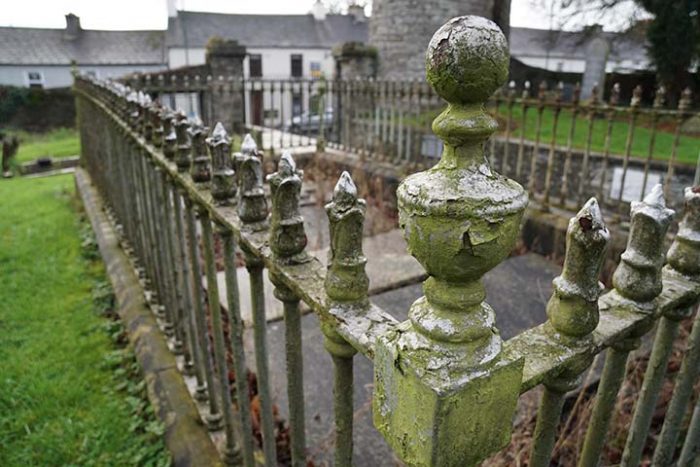
    When you step through the gates, there is an immense sense of history. Some of the graves are visibly older than others, their headstones now resting at an angle rather than their original upright position. Another giveaway of the age is that some of the burial plots have chains around the outside. I’m not sure whether these were designed to keep people out or in. I jest.

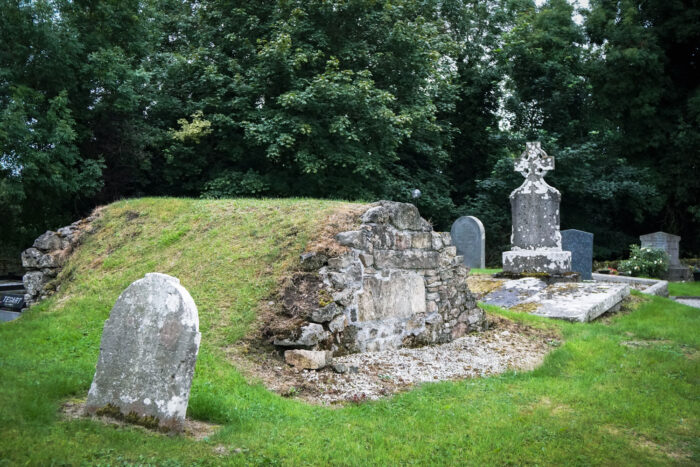
    The stand-out and most unusual thing for me is what seem to be, overground crypts. Now, I’m not sure what way these were designed originally. Perhaps, they were just complete stone boxes overground. Nowadays they have a mound of earth over them and are part of the landscaping around them. They are definitely curious things.
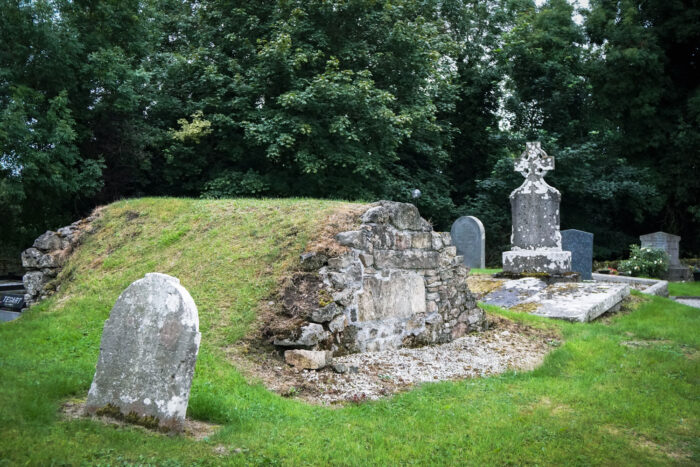
    An overgrown crypt in St Peter's Churchyard

    The church is an imposing structure, especially so here in, what seems like, the middle of nowhere. It would be lovely at some stage to snoop around inside. There are still some services held here but alas, midweek, it was closed.

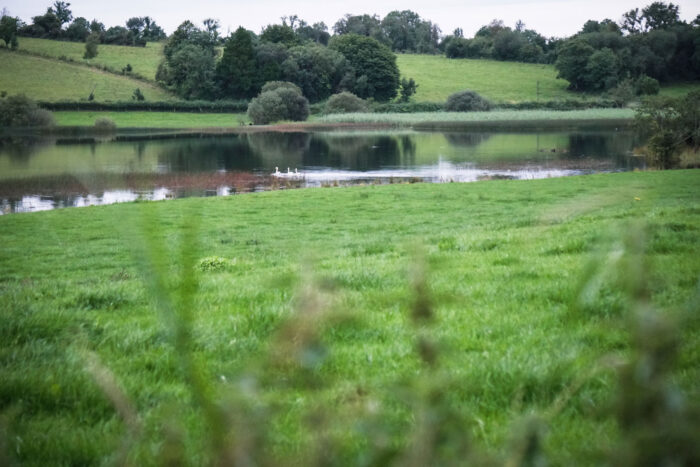
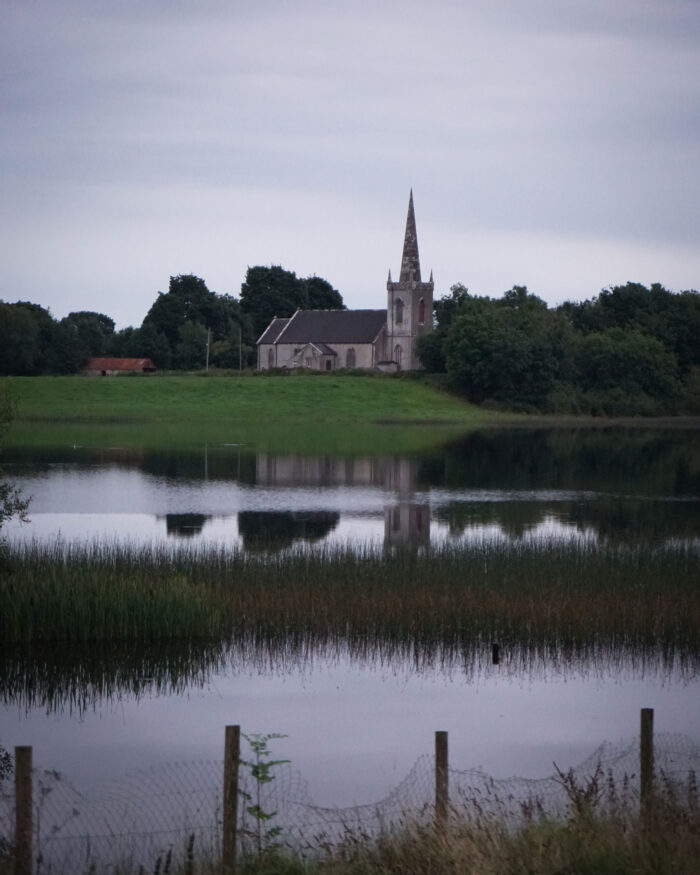
    Behind the church is Templeport Lake, with St Mogue’s Island to the left. It’s quiet a serene setting, with the swans on the lake. But I really wanted to what the church looked like from the opposite side of the lake.

    We jumped into the car and went down another side road. With the lake now on our left, we came to a boathouse and pulled in. The boathouse, the lake, St Mogue’s Island are all very scenic, serene, and beautiful, but the view of St Peter’s is just divine. You really couldn’t get more picturesque.

    The boathouse to St Mogue's Island with St Peter's Church in the background

    Some Photos of St. Peter’s Churchyard

    Hope you enjoy the photos!

    St Peter's Churchyard, Templeport ©nessymon.com
    St Peter's Churchyard Templeport  ©nessymon
    St Peter's Churchyard Templeport  ©nessymon
    St Peter's Churchyard Templeport  ©nessymon
    St Peter's Churchyard Templeport  ©nessymon

    I’d really love a drone to go fly over this whole area and see everything from above. I found this video online which shows a little of what I’d love to do.

  • Don’t Pay for a Passenger Locator Form // Covid-19

    Don’t Pay for a Passenger Locator Form // Covid-19

    Don’t Pay for a Passenger Locator Form

    23/09/21

    Since earlier in 2021, it has become a legal requirement for everyone going into Ireland to fill in a Passenger Locator Form. The same applies to many countries. But, you do not need to pay for these.

    When you book travel, you will be asked / advised to ensure you have all the correct documentation for your trip by your carrier. When you’re going into Ireland, depending on your circumstances, that means proof of vaccinations, proof of a negative RT-PCR test and your Passenger Locator Form. You can always find a list of everything you will need on the Irish government website, gov.ie

    You’ll also need your travel documents, i.e. passport, driving licence or ID. You can find out all you need about travel documents in this blog post ‘Travelling between the UK and Ireland // What Travel Documents do I need?’

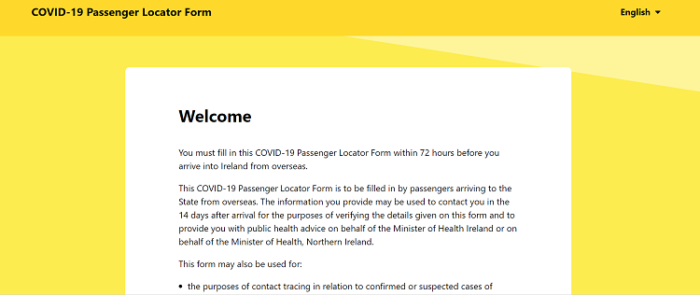
    Screenshot of Irish Passenger Locator Form from travel.eplf.gov.ie

    Dubious Passenger Locator Form Websites

    A Passenger Locator Form is a document that is required to be completed by the traveller into a country. This normally includes, your name and contact details, address you’re staying at, how and when you came into the country and the duration of your stay. At time of writing, it is a legal requirement to complete a Passenger Locator Form when entering Ireland from abroad.

    You do not need to pay to complete a Passenger Locator Form (PLF). These forms are free and are available from the websites of the countries governments who require them. There is no charge for them and there is definitely no charge for filling in an Irish Passenger Locator Form, which can be found here on travel.eplf.gov.ie

    However, as with everything in life, there is always someone somewhere who thinks they can make a quick buck. Unfortunately, during the Covid-19 pandemic, this is rife. There are a number of websites which have set up with the intention of making the unsuspecting traveller pay a fee for the privilege of filling in a passenger locator form. Please do not do this, it only encourages these people. There’s no need to pay someone for this.

    Don’t Pay Someone Else To Fill In A Passenger Locator Form

    Only use official government forms. If these people are going to fill in a PLF for you, you need to give them all the information. You need to give them this information on their website. They will then copy and paste your information into the Irish government Passenger Locator Form and you’ll be quids down. You

    Some of these websites charge between 27-35 £/Euro. Each traveller over 18 must fill in their own individual form. So, for a couple that’s an extra 50/70 quid for the pleasure of filling in a form. Remember, the details you just gave them are the same details you could have filled in yourself on the real form!

    Would You Give A Stranger Your Passport and Bank Details?

    Also, and here’s the concerning bit for me. These companies have been set up to ‘provide a service’. If people are unfamiliar with the internet or are unsure of exactly what they are looking for, they become easy prey for these companies. I’m not saying that they are scammers, it seems that they do actually fill in the form. But, as well as having all your details, name, address, date of birth, passport number etc., they also now have your bank details, which for me is a major issue. Just think of the potential for data protection breaches.

    The bottom line is you don’t have to pay to get yourself a Passenger Locator Form. You can fill it in yourself. The Irish one can be found here. If you fill in a form on a website where you pay to get a PLF, you don’t know what they do with your data. Bottom line, they now know everything about you and have your bank details.

    Do your research. Only use a form from an official government website. You don’t want your holiday turning into a nightmare!

    If you’re Irish or going to Ireland and have any doubts about what you should do, always contact your local Embassy or Consulate for advice.

    Photos from Pixabay.

  • Safe Home Ireland // Home Thoughts From Abroad

    Safe Home Ireland // Home Thoughts From Abroad

    Safe Home Ireland – Home Thoughts From Abroad

    I don’t often get the chance to chat about myself really (which is why I should probably blog more).So, when the nice folk at Safe Home Ireland, asked if I would like to take part in their ‘Home Thoughts from Abroad‘ series.

    From their website: ‘Safe Home Ireland is an emigrant support service. We provide advice, information and housing assistance to people who are thinking of returning or moving to Ireland.’ You can read more here.

    When I’m interviewing people for my radio show, I often do draw from my own experiences when asking questions but an interview isn’t about the interviewer, it’s about the person being interviewed. Which is why, I guess, when I do write anything about myself I often wonder if it’s the correct thing to write or if I should stay shtum about a subject.

    Realistically, I’m too old for that crap anymore. If you like me, you like me. If you don’t, well that’s none of my business. There are more important things to worry about in the world.

    Ireland From Afar

    So, that meant that I really enjoyed sitting down and answering all the questions posed by Safe Home Ireland. It also made me think a lot about Ireland, possible returns to Ireland in the future and if, indeed, I ever would permanently live there again. I don’t have a crystal ball. No one can predict the future but it definitely got me thinking about my relationship with Ireland.

    But all those thoughts are for another day. Right now, I’d recommend you grab a cuppa and head over to Safe Home Ireland for a nice read. Thanks to the the gang at Safe Home Ireland for letting me share my musings.

  • An Hour to Kill… in St Columba’s Churchyard, Kells, Co. Meath

    An Hour to Kill… in St Columba’s Churchyard, Kells, Co. Meath

    An Hour to Kill…in Kells, Co. Meath

    It’s not very often that I have an extra hour to spare in Kells anymore. As I’m living abroad, it’s always a case of cramming as much as possible into the short amount of time I get at home.

    This time, however, I was at home on a weekday, a Friday. My Mum had arranged to meet her friend for lunch at midday and my Dad was free at 1pm, leaving me with a whole hour to myself. I decided I’d do something I’ve been meaning to for quite a while but never got round to it.

    st columbas churchyard kells - nessymon 24

    Taking photos in St Columba’s Churchyard, Kells

    Every time I go to Kells, I’ve been meaning to pop into St. Columba’s Churchyard to take some photos. To be honest, even though you have to go past the church on the way to my parents’ house, I haven’t been in there in years. Thinking back, I guess the last time that I was in the churchyard was possibly while I was in school.

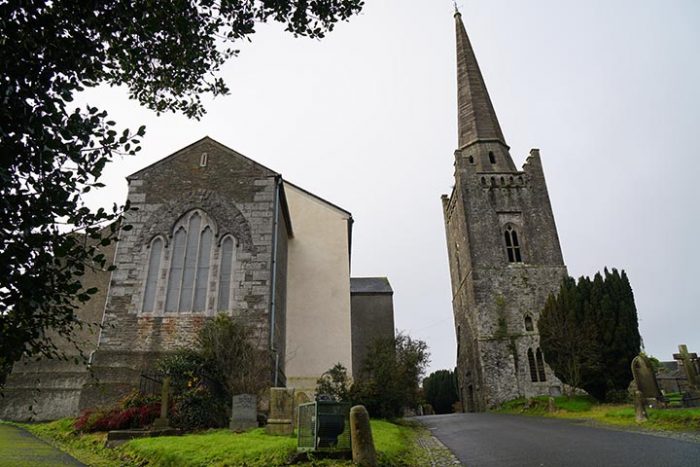
    There’s so much history in the area. St Columba’s Church was built in 1778 and stands on the site of the original monastery in Kells.

    An earlier church stood to before the current one. All that’s left of that is the bell tower at the back. Just the far side of the church walls to the north is St Colmcille’s house, a little stone house where monks probably lived.

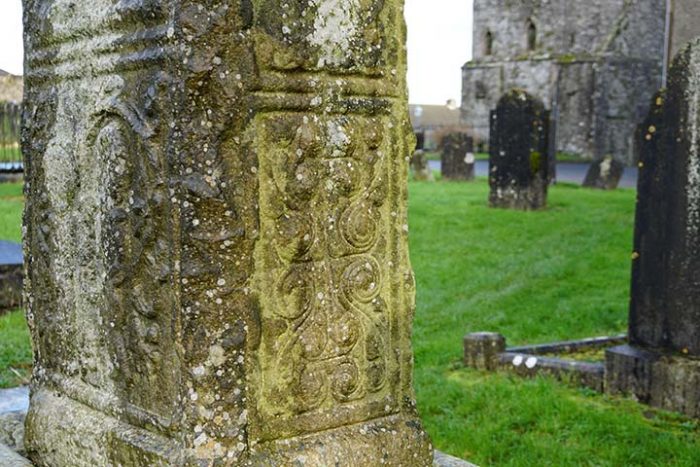
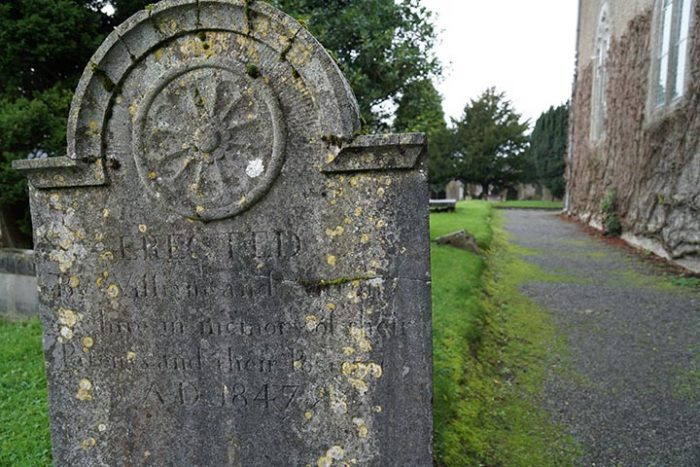
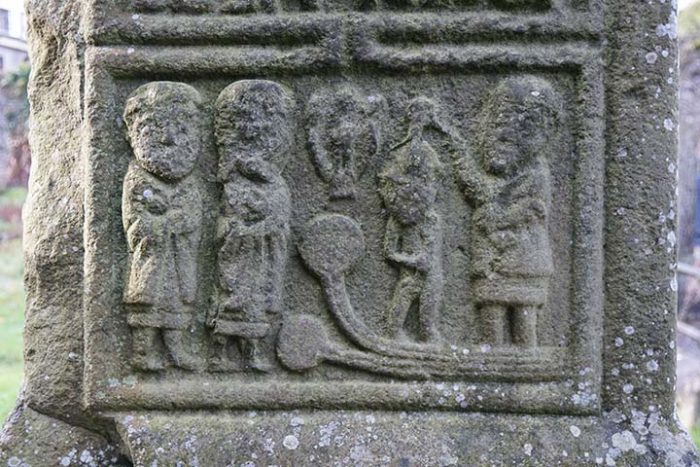
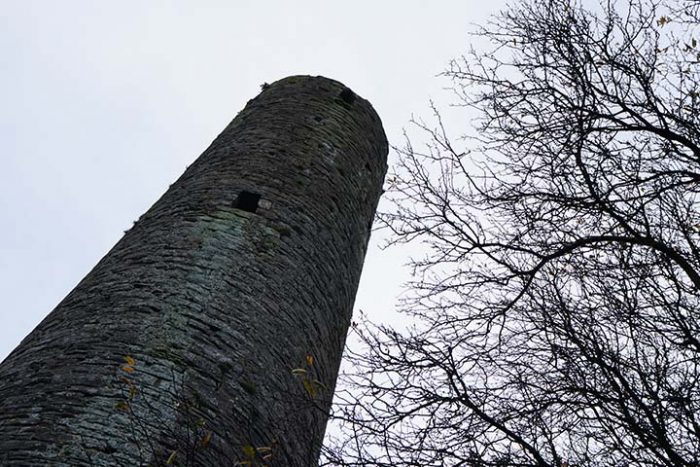
    In the grounds of the church, stands a Round Tower and five celtic crosses. These are probably from 10/11th century. The Round Tower is unusual, there are five windows on its sides. At school, we learned that this was because Kells had five major roads leaving the settlement and these acted as a watchout spot.

    Most of you will have heard of the Book of Kells. It was started in Iona in Scotland and brought to Kells for safekeeping when the vikings attacked. It was probably in that Round Tower on more than one occasion. Anyway the book may have been completed in our lovely little local town but it was eventually stolen and was later found in a bog in Oristown with the gold edges cut off.

    History being history means that wasn’t enough for the book. Henry Jones, who was head of intelligence for Oliver Cromwell’s army, was made vice-chancellor of Trinity College. He took the book to it’s current location and without him, millions of people would never have seen the Book of Kells.

    I need to visit St Columba’s Churchyard again

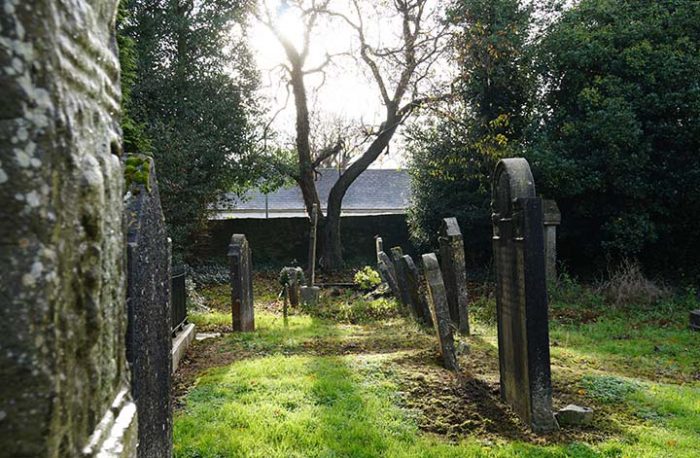
    I was happy enough with some of the photos I took that day. It was winter, it was very cold. The ground was very uneven and in some places you could see that it had dramatically sank underneath the headstones.

    Even though the churchyard is in the middle of Kells, I was very aware that if I slipped on the wet grass or if ground gave way, I could be lying there in a heap for ages. I really didn’t want to fall and hit my head. So, even though I managed to have a nice hour in St Columba’s Churchyard, I really need to visit again, when it’s dry and bright and maybe bring someone with me, just to be on a safe side.

    Enjoy the photos!

    St Columba's Churchyard

    Celtic Cross

    st columbas churchyard kells - nessymon

    st columbas churchyard kells - nessymon

    st columbas churchyard kells - nessymon

    st columbas churchyard kells - nessymon

    St Columba's Churchyard

    st columbas churchyard kells - nessymon

    st columbas churchyard kells - nessymon

    The sun in the churchyard

    Celtic Decoration

    st columbas churchyard

    st columbas churchyard kells - nessymon

    st columbas churchyard kells

    The gate at the bell tower
    The gate at the bell tower